Exploring Fort Clinch State Park and Nassau County’s Wild Side
Ready to Drive Through a Tunnel of Live Oaks to Get to a Fort?
The road into the park narrows almost immediately, and then the canopy closes over you. Live oaks on both sides, limbs meeting overhead, Spanish moss hanging low enough that you slow down without meaning to. Sunlight comes through in coins on the pavement. Two and a half miles of this, and then the trees open and there is salt marsh, and then there is the Atlantic, and then there is a brick fort sitting exactly where it has sat since before the Civil War.
Nassau County keeps doing this to people. You think you know what to expect and then it hands you something like Fort Clinch.
Fort Clinch State Park occupies the northern tip of Amelia Island in Nassau County and combines a preserved 19th-century masonry fort with beaches, campgrounds, a fishing pier, hiking and off-road bike trails, and a canopied entrance road through maritime hammock. It anchors a broader network of Nassau County outdoor destinations including Egans Creek Greenway, Amelia Island State Park, and thousands of acres of state forest west of Yulee.
The Fort Itself
Construction on Fort Clinch began in 1847, and the fort was never fully completed, which is part of what makes it so interesting to walk through. It was occupied by Confederate forces early in the Civil War and taken by Union troops in 1862, then used again during the Spanish-American War and later during World War II.
What you get today is one of the best-preserved 19th-century masonry forts in the country. You can walk the ramparts, go down into the powder magazine, look into the barracks and the kitchen, and stand on the seaward wall watching ships move through Cumberland Sound toward the Georgia side.
The park runs living history programs where interpreters in period uniform work the fort as it would have functioned, and the effect is considerably more engaging than a plaque. Ask questions. They stay in character and they know their material.
Give yourself at least an hour inside the walls. Most people plan for twenty minutes and end up staying much longer.
The Beaches, the Pier, and the Water
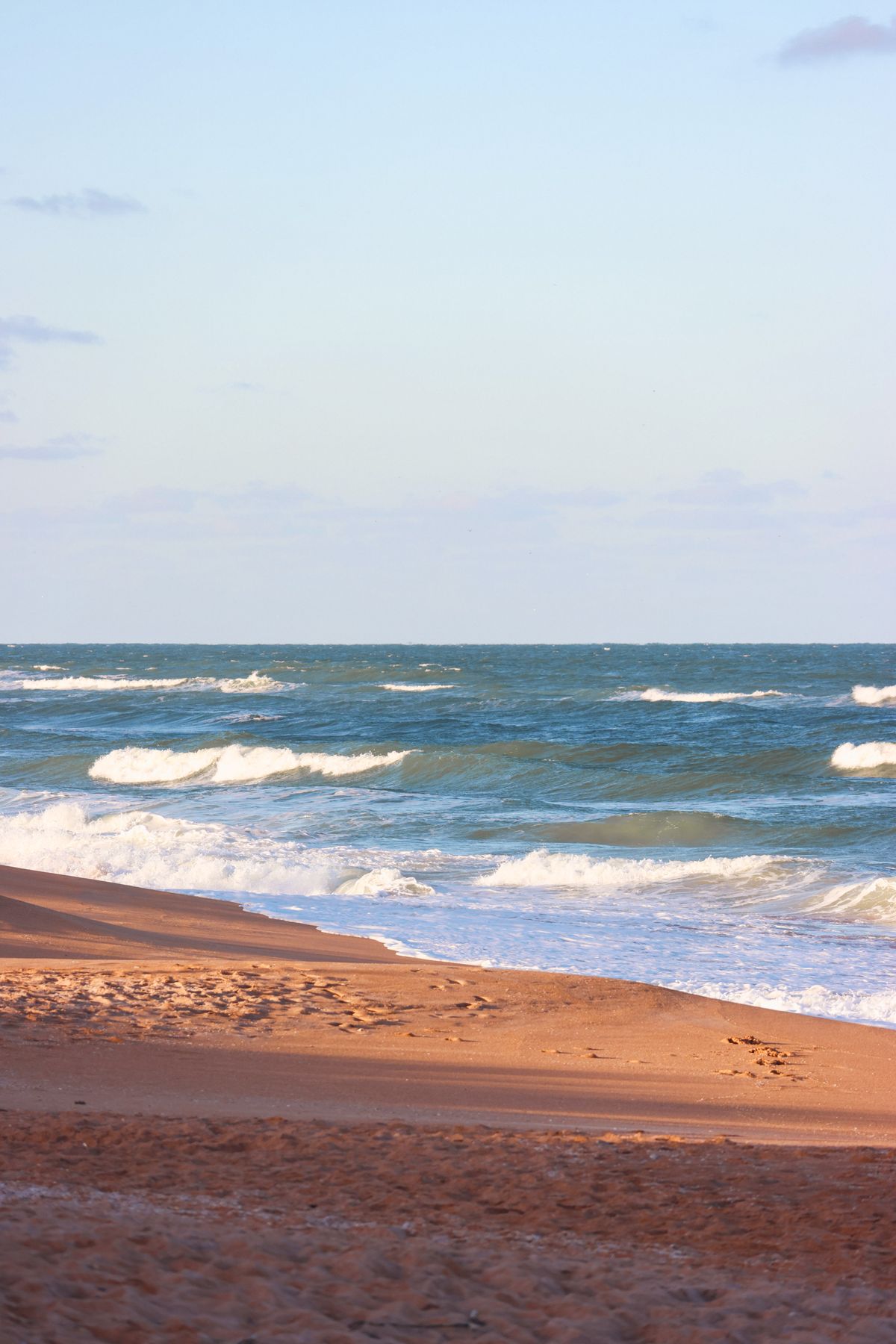
Fort Clinch has roughly a mile of Atlantic beach plus frontage on the Amelia River and Cumberland Sound, which gives it a range of water experiences most parks cannot match.
The ocean beach here is quiet. Because access requires driving into the park, you get a fraction of the traffic that the Fernandina Beach public accesses receive, and the shelling is noticeably better for exactly that reason.
The fishing pier extends into Cumberland Sound and is one of the better shore fishing spots in Northeast Florida, with redfish, flounder, and sheepshead all in the conversation depending on the season. Bring a rod even if you are not sure you will use it.
Sunrise on the ocean side and sunset over the river side, in the same park, on the same day. That is not a common offer.
Trails, Camping, and the Off-Road Ride
The Willow Pond Nature Trail loops through hardwood hammock and past freshwater ponds where alligators, turtles, and wading birds are routine sightings. It is short, shaded, and easy, which makes it ideal for families and for hot afternoons.
The park also maintains an off-road bicycle trail that runs several miles through the interior, and it has a real reputation among Northeast Florida riders. Sand, roots, tight turns through palmetto, and enough elevation change to keep it honest.
Camping is the sleeper feature. Fort Clinch has campgrounds on both the Atlantic side and the river side, and the oceanfront sites in particular book out far in advance. If you have ever wanted to fall asleep to surf inside a state park, this is your reservation to make, and you should make it early.
Thinking About Nassau County?
From historic Fernandina Beach to new construction in Yulee, this county offers space, coastline, and a slower pace. Let's look at what fits.
Call or text Joey Larsen: 904-863-6679
or visit RetireMeToFlorida.com
Egans Creek Greenway and the Fernandina Side
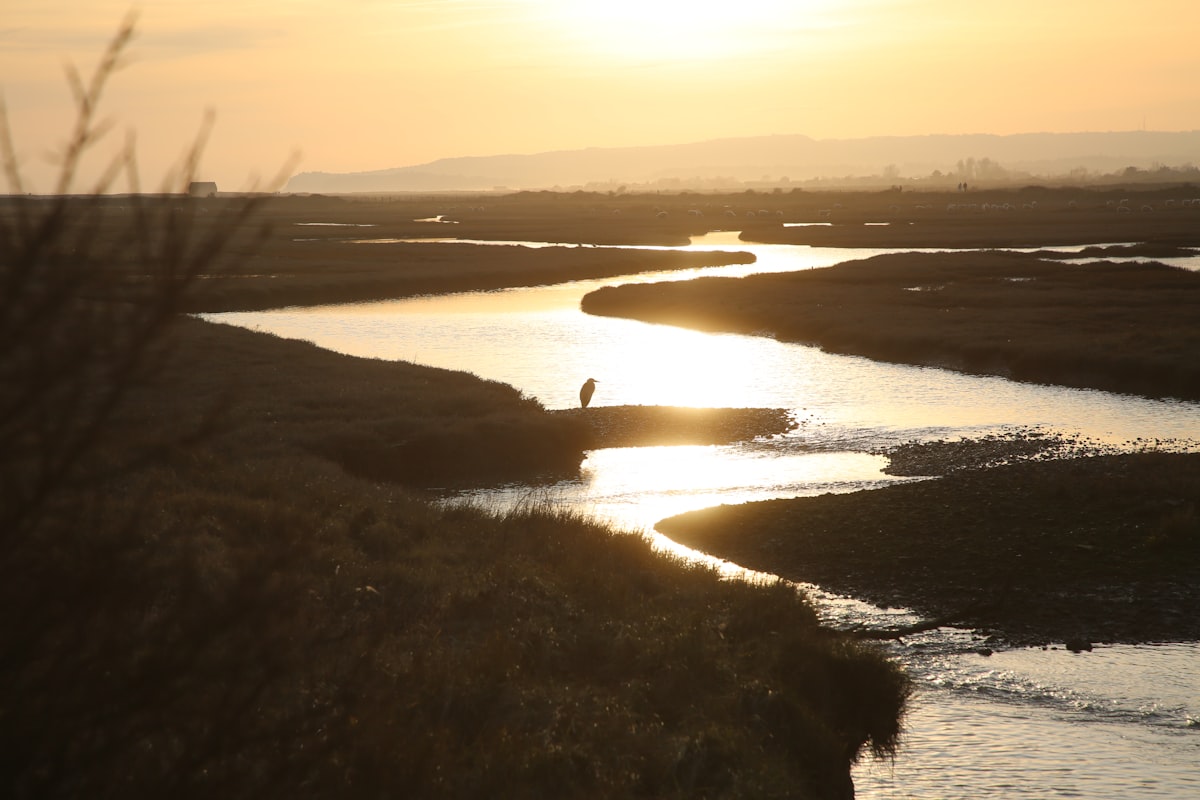
Just outside the park, Egans Creek Greenway threads through the middle of Amelia Island as a preserved corridor of salt marsh and creek. Wide crushed-shell paths make it easy walking or riding, and the wildlife density is remarkable for something sitting inside a town.
Wading birds constantly. Alligators regularly. Otters and marsh rabbits if you are patient and quiet. It is the sort of place locals use every single week and visitors never find.
Combined with the historic downtown along Centre Street and the harbor, Fernandina Beach gives you a rare package: a walkable historic town with genuine wild space woven directly through it.
The South End and the Talbot Islands
Run down island and you reach Amelia Island State Park at the southern tip, where the island meets Nassau Sound. Undeveloped, wide, and windswept, this is the beach that feels the least touched, and it is one of the few in Florida that permits guided horseback riding on the sand.
Cross the bridge and you are into the Talbot Islands. Big Talbot Island is home to Boneyard Beach, where salt-bleached oak and cedar skeletons lie across the sand beneath an eroding bluff. It is one of the most photographed landscapes in Northeast Florida and it deserves the attention.
Little Talbot Island offers more traditional beach plus hiking, and just south of that, Huguenot Memorial Park sits at the mouth of the St. Johns River with some of the best bird watching on this coast.
Inland Nassau: The Part Nobody Talks About
West of Yulee, Nassau County turns into pine flatwoods, blackwater creeks, and thousands of acres of managed state forest land.
Ralph E. Simmons Memorial State Forest sits up against the St. Marys River near Hilliard, offering hiking, paddling, primitive camping, and equestrian trails. Cary State Forest, closer to Callahan, adds more trail miles and a wildlife-viewing tower.
Lofton Creek and the Nassau River offer some of the best flatwater paddling in the region, winding through marsh and hammock with almost no development in sight.
This is the Northeast Florida that existed before the growth, and a significant amount of it is protected in perpetuity. That is worth understanding if you are evaluating Nassau County as a place to live.
What This Means If You Are Looking at Nassau County
Nassau County is one of the more interesting real estate stories in Northeast Florida right now, and the outdoor access is a big part of why.
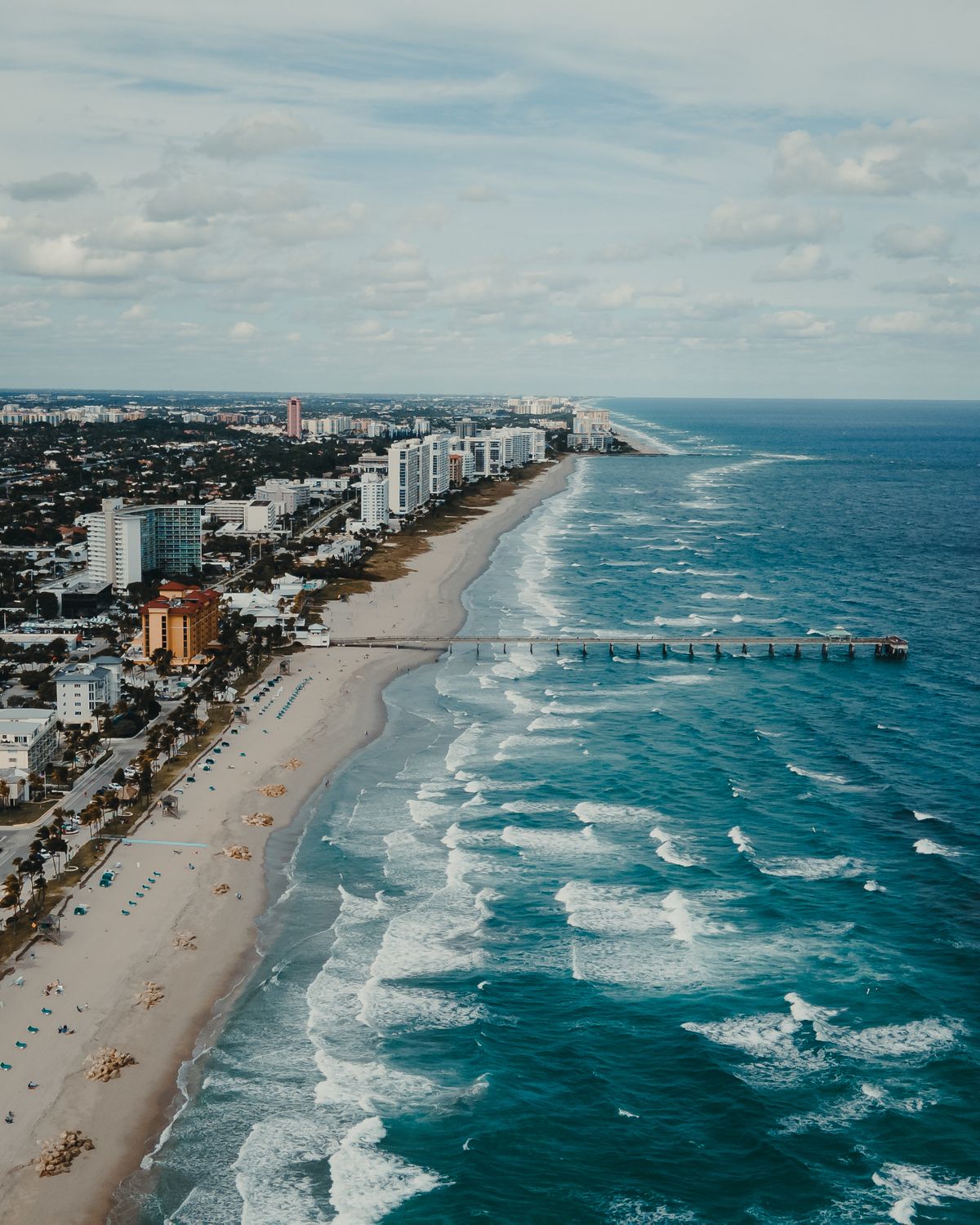
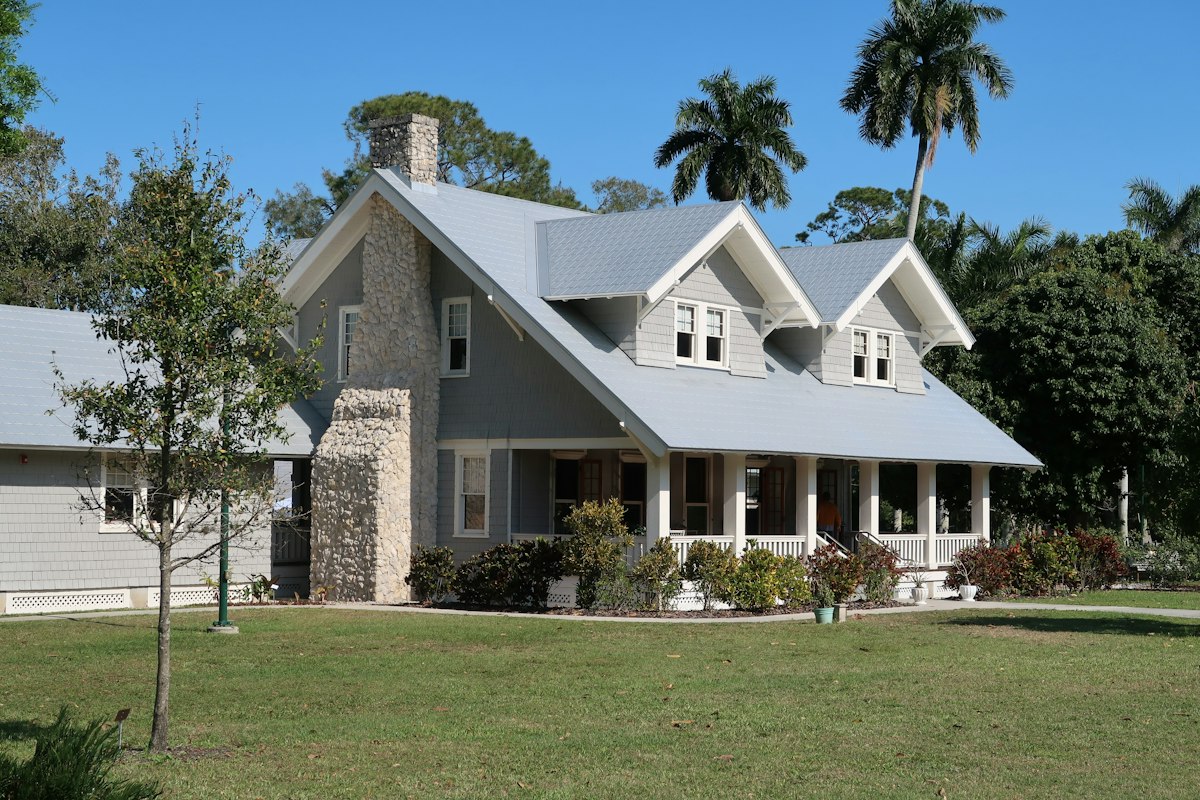
Fernandina Beach and Amelia Island give you island living, a walkable historic downtown, and Fort Clinch within a ten minute drive. Housing runs from restored Victorians and cottages downtown to oceanfront condos and homes along the island's eastern shore. It is the premium end of the county and it holds its character well.
Yulee, on the mainland side of the bridge, has become the county's growth engine. Tributary is the standout master-planned community there, with new construction, substantial amenities, and preserved natural areas built into the plan. From Yulee you are fifteen to twenty minutes from the island beaches and roughly thirty from the Jacksonville International Airport area, which is a genuinely strong position.
Farther west toward Callahan and Hilliard, you find acreage, rural zoning, and the lowest cost per square foot in the county, with the trade-off being drive time to the coast.
Compared with St. Johns County communities like Nocatee, Shearwater, and RiverTown, Nassau County generally trades some retail density and commute convenience for more open space and more coastline per resident. Which one is right depends entirely on how you want to spend a Saturday.
Frequently Asked Questions
What is there to do at Fort Clinch State Park?
The park offers a preserved 19th-century masonry fort with living history programs, about a mile of Atlantic beach, a fishing pier on Cumberland Sound, the Willow Pond nature trail, an off-road bicycle trail, and campgrounds on both the ocean and river sides.
Is Fort Clinch State Park good for camping?
Yes, and it is one of the more sought-after campgrounds in Northeast Florida. Sites are available on both the Atlantic beach side and the Amelia River side, and oceanfront sites typically book well in advance.
What other outdoor destinations are near Fort Clinch?
Egans Creek Greenway runs through the middle of Amelia Island nearby, Amelia Island State Park sits at the southern tip, and the Talbot Islands with Boneyard Beach are just across the Nassau Sound bridge. Inland, Ralph E. Simmons Memorial State Forest and Cary State Forest offer extensive trail systems.
Is Nassau County a good place to live for outdoor recreation?
It is among the strongest in Northeast Florida. The county combines Atlantic beaches, state park and state forest acreage, and excellent paddling on the Nassau River and Lofton Creek, with communities from historic Fernandina Beach to newer construction in Yulee providing access to all of it.
Search Northeast Florida Homes
Browse active listings across Northeast Florida, from master-planned communities in Nocatee, RiverTown, Tributary, and St. Johns County to coastal homes in Ponte Vedra Beach, Jacksonville Beach, Neptune Beach, and Atlantic Beach.
What To Do Right Now
Spend a Saturday at Fort Clinch, then drive the mainland side through Yulee on your way home. That single loop tells you most of what you need to know about Nassau County.
Call or text Joey Larsen at 904-863-6679, or visit RetireMeToFlorida.com to get started.
Categories
- All Blogs (470)
- Buyer Questions (10)
- Buyer Resources (14)
- Communities (8)
- Cost of Living (6)
- Insurance & Risk (1)
- Jacksonville / St. Johns County (3)
- Joey Studies The Market (1)
- Local Area Happenings (1)
- Local Favorites (97)
- Market Intelligence (96)
- Market Update (3)
- Nocatee (2)
- Northeast Florida Market (1)
- Our Communities (4)
- Questions Buyer Are Asking (25)
- Questions Sellers Are Asking (8)
- Real Estate Done Right (11)
- Relocation (1)
- Relocation Guides (87)
- Retirement Planning (4)
- Seller Resources (3)
- The Florida Life (103)
Recent Posts